Botanical Elegance: A Designer's Guide to Watercolor Wedding Greenery
There is a specific kind of magic in the way watercolor pigment bleeds into textured paper, creating edges that are soft, organic, and impossible to replicate with digital vectors alone. In the world of event stationery and branding, this aesthetic has become the gold standard for couples seeking a look that feels both timeless and deeply personal. If you have been scrolling through Pinterest boards lately, you have likely noticed a shift away from rigid, high-gloss designs toward something more tactile and nature-inspired. This is where the power of botanical illustration steps in, specifically the lush, verdant beauty of eucalyptus and mixed greenery rendered in watercolor.
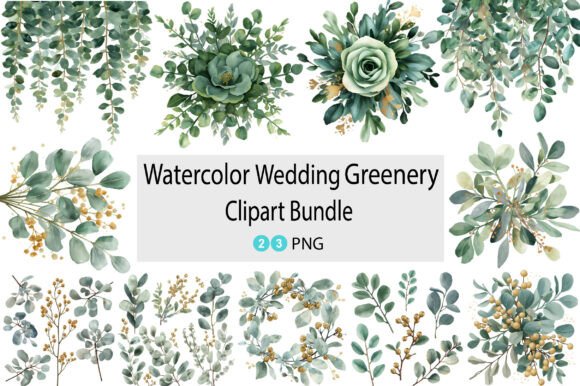
For designers, content creators, and entrepreneurs, capturing this organic aesthetic used to mean spending hours with a paintbrush and scanner, followed by painstaking digital cleanup. However, the availability of high-quality digital assets has democratized this process. We are going to dive deep into how you can utilize a specific collection—specifically the Watercolor Wedding Greenery Clipart Bundle featuring eucalyptus leaves and botanical foliage—to transform your creative projects. Whether you are crafting a brand identity for a floral shop, designing a wedding suite, or curating social media content, understanding how to leverage these elements is key to a professional presentation.
The Psychology of Green: Why Eucalyptus Dominates Modern Design
Before we get into the technical application of these files, it helps to understand why this specific aesthetic resonates so deeply with audiences. Green is universally associated with renewal, harmony, and nature. When you pair that psychological trigger with the soft, dreamy texture of watercolor, you create a visual language that feels calming and luxurious.
Eucalyptus, in particular, has become a staple in modern wedding design. Its muted sage and mint tones act almost as a neutral, meaning it pairs beautifully with a wide range of color palettes—from blush pinks and dusty blues to crisp whites and golds. Unlike more chaotic floral arrangements, the structure of eucalyptus leaves offers a rhythmic flow. For a brand strategist, this is invaluable. It suggests reliability and organic growth without being overwhelming.
When sourcing these assets, quality is paramount. You want illustrations that maintain the granular texture of real pigment. A bundle that offers 300 DPI high-resolution PNG files with transparent backgrounds ensures that the "paper" texture disappears, leaving only the beautiful paint strokes. This allows you to layer the greenery over any background color or image without the awkward white box effect that plagues lower-quality clipart.
Practical Applications: Beyond the Wedding Invitation
While the keyword "Wedding" is right there in the title, limiting these assets to save-the-dates would be a missed opportunity. As a designer or small business owner, you should view a high-quality clipart bundle as a versatile toolkit for editorial design and packaging.
Consider the world of e-commerce branding. If you sell handmade soaps, candles, or artisanal goods, your packaging needs to communicate "natural" and "handcrafted" instantly. Wrapping a watercolor eucalyptus branch around a logo or using a botanical wreath to frame product details on a label creates an immediate emotional connection with the buyer. It elevates a generic label into a premium product experience.
Furthermore, think about your digital real estate. Social media graphics require constant refreshing. Using these botanical elements to create borders for Instagram posts, or "frames" for text overlays on Pinterest graphics, keeps your feed cohesive. You can use the individual leaves to break up text blocks in a blog post, or use a full arrangement as a website hero image background with a text overlay. The versatility of a PNG collection means you have isolated elements (single leaves) and complex arrangements (wreaths and branches), allowing you to scale your design complexity based on the project's needs.
Integrating Botanicals with Typography
A stunning watercolor illustration can be undermined instantly by poor typography choices. Conversely, the right font pairing can make the greenery sing. Because watercolor greenery is inherently organic and soft, you generally want to avoid ultra-modern, geometric sans-serif fonts that might clash with the fluidity of the paint.
Instead, look toward serif fonts with a bit of character or elegant script fonts. A classic serif typeface provides structure and readability, grounding the loose nature of the watercolor. This is crucial for brand identity work where legibility is non-negotiable. For headlines or monograms, a flowing handwritten font or calligraphy script mimics the movement of the brush strokes, creating a harmonious visual rhythm.
When designing a layout, treat the greenery as a supporting actor to your typography. Don't let the leaves obscure the text. Use the "Rule of Odds" or balance a heavy floral arrangement on one side of the page with bold typography on the other. If you are working on packaging design, ensure there is enough negative space between the foliage and the product name. The goal is sophistication, not clutter.
Technical Workflow: Getting the Most Out of Your PNGs
Working with high-resolution PNG files requires a basic understanding of file management to ensure your final output is crisp. Since these files are 300 DPI, they are print-ready, which is essential for anything from posters to physical merchandise. However, if you are using them for web design, you will need to optimize them.
When resizing these elements for your website or social media graphics, always maintain the aspect ratio to prevent stretching the leaves, which breaks the realism of the watercolor effect. Use your design software’s blending modes. "Multiply" is often a designer’s best friend when layering watercolor; it drops out the white areas and lets the texture of the underlying layers show through, creating a more authentic mixed-media look.
Also, consider the composition of the bundle. A collection that includes "loose" elements—individual stems and single leaves—gives you the flexibility to build your own arrangements. You aren't stuck with a pre-made wreath if it doesn't fit your layout. You can curate a custom corner piece for a business card or a subtle footer for a menu. This modularity is what separates amateur designs from professional editorial layouts.
Commercial Considerations and Brand Consistency
For the entrepreneur or content creator, the legal side of design assets is just as important as the aesthetic. When you invest in a premium clipart bundle, you are usually paying for a commercial license, but it is vital to read the fine print. Ensure the license allows for the creation of end products for sale—like printables, merchandise, or templates—without requiring you to credit the original artist for every single item you sell.
Building a brand requires consistency. Once you choose a specific shade of watercolor green to represent your brand, stick to it. Use the eyedropper tool to sample the greens from your clipart and apply them to your text or background accents. This creates a unified visual identity. When a customer sees that specific shade of sage green, they should immediately think of your brand. This is the power of effective visual communication; it transcends the logo and becomes a feeling associated with your business.
Ultimately, incorporating watercolor greenery into your work is about more than just decoration. It is about signaling quality, attention to detail, and a connection to the natural world. Whether you are a hobbyist scrapbooking a memory or a professional designer building a wedding empire, these botanical assets provide a foundation for creativity that is both timeless and deeply engaging. By focusing on quality assets, thoughtful typography, and strategic application, you ensure your designs stand out in a crowded visual landscape.